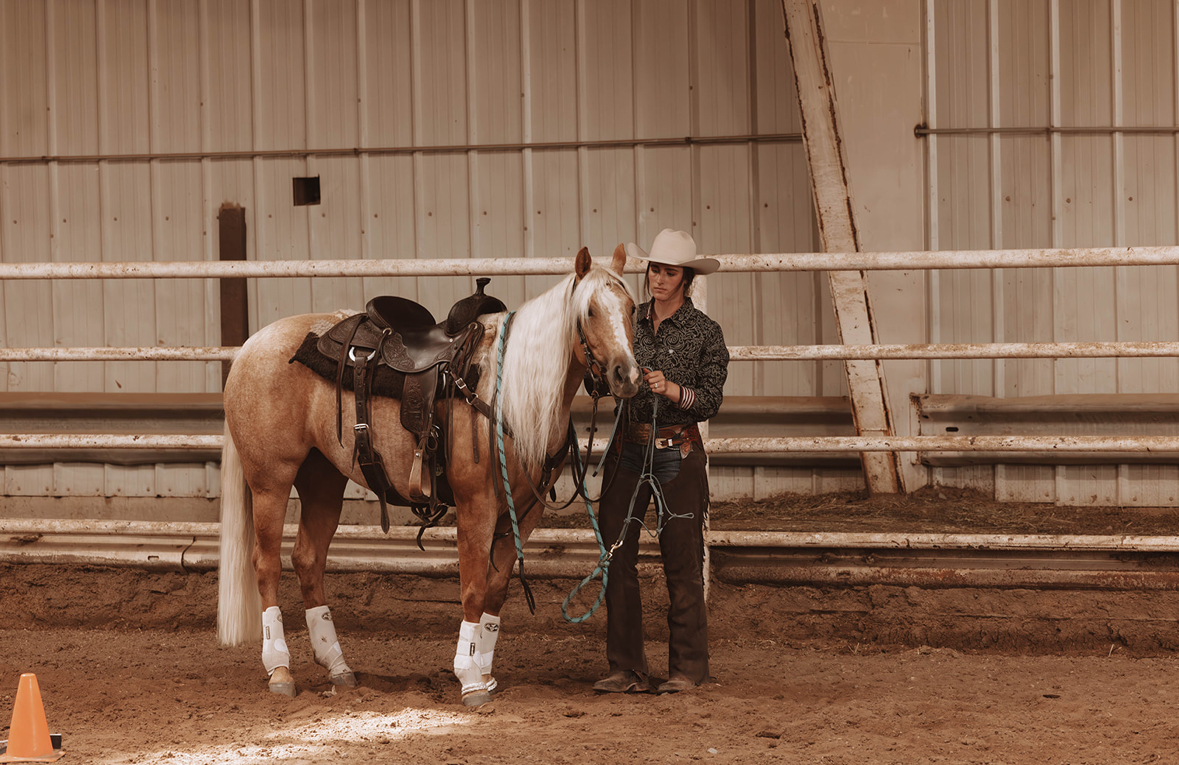
Horsemanship Philosophy
Good horsemanship starts with understanding the horse in front of you.
At The Golden Horse, we don’t believe good horsemanship comes from following the exact same formula with every horse. Horses are individuals. They have different minds, abilities, sensitivities, strengths, and ultimately, different jobs.
Our goal is to understand the horse we’re working with, give them a solid foundation, and develop them into confident, willing, and capable partners.
Whether we’re starting a young reined cow horse prospect or developing a dependable family and trail horse, the details may look different, but the foundation of our horsemanship stays the same.
Every Horse Is Different
There isn’t one timeline, training method, or expectation that fits every horse.
Some horses are naturally confident and progress quickly. Others need more time to understand something or become comfortable in a new situation. Some are highly sensitive and athletic, while others are naturally quiet and forgiving.
We believe good horsemanship means recognizing those differences rather than trying to force every horse into the same mold.
That doesn’t mean lowering expectations. It means finding the clearest and most effective way to help each individual horse understand what is being asked of them.
A Foundation Before a Finished Product
Regardless of what a horse will eventually do, we value a strong foundation.
We want our horses to understand how to respond to pressure, move their bodies willingly, stay connected to their rider, and approach new situations with confidence.
For young horses especially, our focus is on creating clarity early. Dallon takes particular pride in starting colts and developing them efficiently. The goal isn’t simply to see how quickly a horse can progress. It’s to establish communication that allows the horse to progress naturally as they understand more.
As that foundation becomes stronger, we can begin asking for more advanced work without constantly going back to repair holes in the basics.
Training for the Horse’s Job
We work in two very different sides of the horse industry, and we don’t expect every horse to fit the same definition of success.
Performance Horses
With our reined cow horses, genetics and natural ability play an important role from the beginning. We look for horses with the instinct, athleticism, willingness, and trainability needed for a demanding performance discipline.
Their training develops the body control, responsiveness, maneuverability, confidence, and cow sense necessary to eventually perform at a high level.
We believe in developing the natural ability that is already there while giving the horse the foundation necessary to use it.
Family, Trail & Gaited Horses
For horses intended to become ranch, trail, gaited, or family horses, our priorities shift.
A good mind becomes incredibly important. We want these horses to be confident, willing, responsive, and capable of handling the situations they’ll encounter outside of an arena.
That means their education shouldn’t stop simply because they know how to walk, trot, lope, stop, and steer.
More Than Arena Broke
We want our horses to make sense outside the arena.
A horse can perform beautifully in controlled conditions and still lack the confidence and experience needed in everyday life. We value horses that can leave the arena, go do a job, encounter something unfamiliar, and continue looking to their rider for direction.
Depending on the individual horse and its intended job, that may include exposure to trails, cattle, obstacles, different environments, and practical everyday situations.
We also enjoy developing horses beyond the basics. Over the years, Dallon has taught horses skills ranging from sidepassing to a mounting block to picking objects up from the ground and handing them to their rider, and even riding completely bridleless.
Those skills may be fun, but there’s a purpose behind them. They require communication, responsiveness, trust, and a horse that understands how to think through what is being asked of them.
To us, versatility is one of the best demonstrations of a solid foundation.
The Right Horse for the Right Rider
One of the biggest things we’ve learned through working with horses is that a good horse isn’t automatically the right horse.
A horse can be extremely well trained and still be a poor match for a particular rider.
Temperament, sensitivity, confidence, athletic ability, experience, personality, and training all matter. So does the rider’s experience, confidence, goals, and intended use for the horse.
That’s why we take matching horses with their future riders seriously.
When we offer a horse for sale, our goal is to represent that horse as honestly as we can. We want prospective buyers to understand what the horse does well, where they are in their training, what they’re like to ride and handle, and what kind of rider or home we believe they are best suited for.
We would rather be upfront about who a horse is than try to make every horse sound like the perfect horse for everyone.
Good Horses Are the Goal
At the end of the day, our horsemanship isn’t about creating horses that all look or perform exactly the same.
It’s about developing the individual horse in front of us.
Some may go on to compete in the reined cow horse arena. Others may spend their lives carrying a family down the trail. Some may become ranch horses, gaited horses, youth horses, or simply someone’s favorite horse to ride.
Their jobs may be different.
Our goal remains the same: a willing, confident, well-founded horse that understands its rider and is prepared for the job ahead.

